Thursday 16 April 2026 – Heather Holmes, Ethnologist. Holy Trinity Church, Church Street, Haddington at 7.30pm.
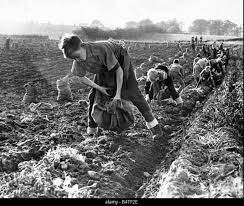
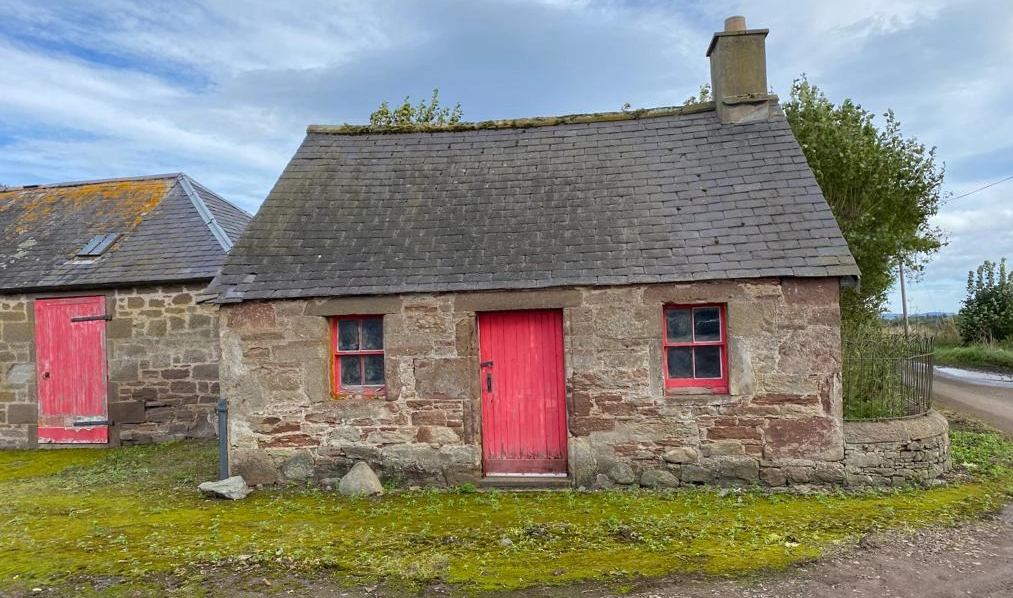
Irish migratory potato workers played an important role in farming in East Lothian from the late nineteenth century until the mid-twentieth century. Evidence of their presence can be found at Papple Farm on the Whittingehame Estate, where archaeological surveys and historical records show that Irish workers lived in farm cottages between the 1940s and late 1950s. Graffiti left on the cottage walls recorded workers’ names, home villages in Ireland, employers, dates of stay, and types of work carried out. These sources show that workers carried out seasonal tasks such as turnip hoeing in spring and potato harvesting in late summer and autumn.
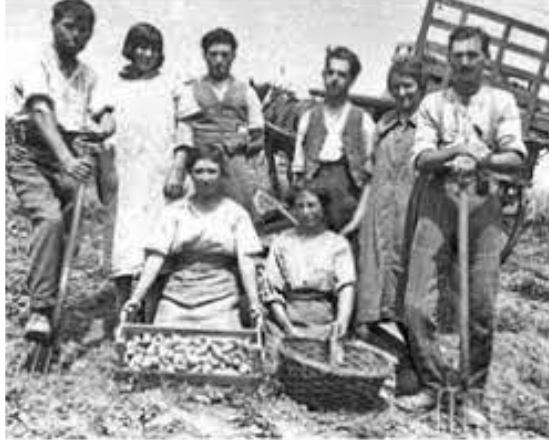
Irish potato workers were one of three main groups of Irish seasonal labourers who worked in Scottish agriculture. The first group consisted mainly of male workers from Donegal who undertook general farm work such as weeding, haymaking, and harvesting from spring until winter. The second group consisted mainly of female squads who travelled in organised groups and carried out seasonal farm tasks until the early twentieth century. The third and most significant group were the potato workers, often called tattie howkers or hokers. These workers travelled across Scotland in squads of around 20 to 30 people, moving from west to east as different potato crops ripened. Some remained in Scotland during the winter to grade and prepare potatoes for market.
The need for Irish workers grew as potato farming expanded in Scotland during the late nineteenth century. The climate in areas such as East Lothian was well suited to potato growing, and the development of railways allowed farmers to transport crops to markets more easily. Harvesting potatoes required a large labour force, and local workers were often insufficient. As a result, potato merchants became responsible for organising labour. They employed Irish leaders known as gaffers, who recruited workers from their local areas in Ireland, arranged travel to Scotland, supervised work, and distributed wages.
The workers themselves formed strong communities. Many squad members were relatives or neighbours from the same districts, especially in counties Mayo and Donegal. Most workers were young, often beginning the work in their teenage years, and women made up the majority of the workforce. The work was physically demanding but provided an important source of income for families in rural Ireland. Seasonal migration allowed families to pay rent, repay debts, and support their households.
Living arrangements for the workers were basic but organised. They were usually housed in farm buildings such as barns, bothies, or empty cottages. Farmers provided accommodation, bedding materials, and fuel, while merchants supplied blankets, cooking equipment, and potatoes. Regulations known as Seasonal Workers’ Accommodation Byelaws were introduced in the early twentieth century to improve standards. Over time, sanitary inspectors monitored conditions and encouraged improvements such as better sanitation, lighting, and water supplies.
The work itself involved harvesting different types of potato crops, including early and maincrop potatoes. Women typically gathered potatoes into baskets, while men handled heavier tasks such as loading carts. In earlier years, potatoes were harvested by hand using forks (graips), but mechanical equipment gradually became more common. The potato spinner (introduced in 1890s) and the elevator digger (1930s) increased the efficiency of harvesting. Nevertheless, potato harvesting remained very labour intensive until the introduction of the mechanical (complete) harvester (from 1950s), which harvested crops without the need for gangs of workers.
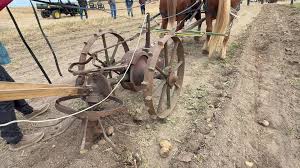
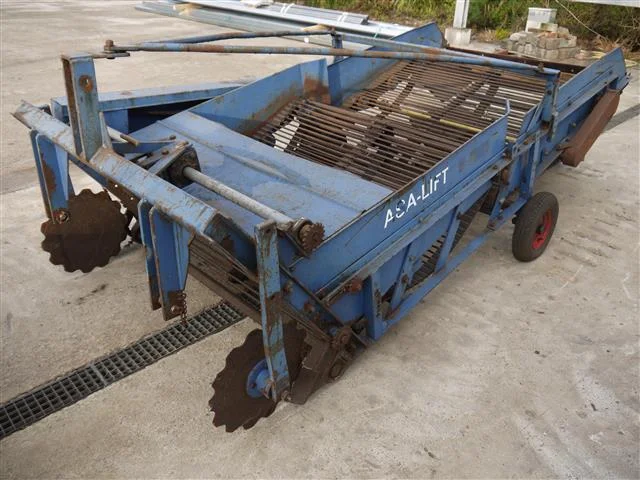
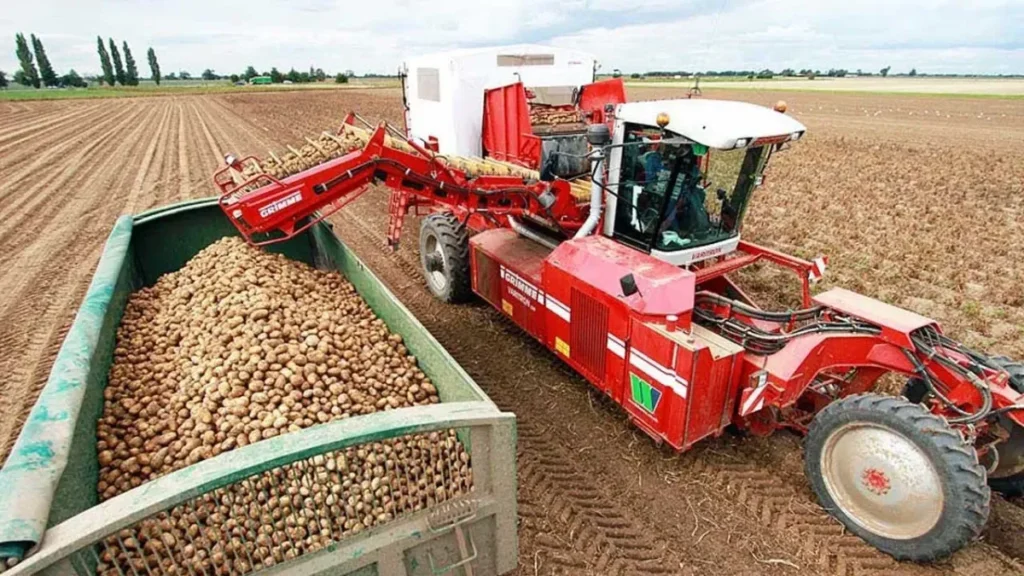
Technological change therefore contributed to the reduction in the need for large numbers of seasonal workers. However, the decline of Irish potato workers occurring since the end of WW2 was due to a combination of factors. In Ireland, improved education and increased employment opportunities reduced the need for seasonal migration. In Scotland, the amount of land used for growing potatoes decreased, and increased mechanisation greatly reduced labour requirements. At the same time, stricter housing regulations made it more expensive for farmers to accommodate seasonal workers. As a result, fewer workers were recruited, and by the early 1980s the system had largely disappeared.
Overall, Irish migratory potato workers were vital to the success of the potato industry in East Lothian and across Lowland Scotland. Their labour supported the growth of commercial potato farming, and their presence left lasting historical evidence in farm buildings and records. Their story represents an important but often overlooked part of Scotland’s agricultural history.
April 2026
Dr Heather Holmes
Dr Heather Holmes is an ethnologist with an interest in the material culture of Scottish agriculture. Her research has focused on a number of subject areas including Scottish implement and machine makers, the social history of steam ploughing in Scotland, agricultural books and newspapers, agricultural labour for the potato harvest including the employment conditions of Irish migratory potato workers in Scotland.
She gained her PhD on the social and economic history of the potato harvest in the Lothians from 1870 to 1995 from the University of Edinburgh in1996. This won the Michaelis Jena-Ratcliffe Prize for the most important contribution to folklife in Britain and Ireland in 1996.
She has a farming background, having grown up at Pilmuir Farm, Balerno, Midlothian.
Select publications
Monographs
- Scottish Agricultural Implement and Machine Makers 1843-1914: A Directory (Scottish Record Society, 2020) (a survey of over 1700 Scottish agricultural implement and machine makers). 920pp.
- Tattie Howkers: Irish Potato Workers in Ayrshire, Ayrshire Archaeological and Natural History Society, Ayrshire Monographs 31. Ayr: Ayrshire Archaeological and Natural History Society, 2005. 192pp. Available online here
- “As good as a holiday” Potato Harvesting in the Lothians 1870 to the Present. East Linton: Tuckwell Press in association with The European Ethnological Research Centre, 2000.
Articles in journals
- Working into steam preservation: steam ploughing engines in Scotland, ROSC: Review of Scottish Culture (2017), 74-105.
- Selling the steam revolution: the Scottish agricultural press and steam ploughing, 1855-1920, The Journal of the Edinburgh Bibliographical Society (2017).
- A neglected innovation: the double furrow plough in Scotland, its early adoption and use, 1867 to 1880, The Agricultural History Review 64:1 (2016), 54-80.
- Agricultural implement makers in Scotland during the late nineteenth and early twentieth centuries, Folk Life: Journal of Ethnological Studies 51:1 (2013), 44-74.
- Constructing identities of the Irish migratory potato workers in Scotland, Folk Life: Journal of Ethnological Studies 43 (2004-05), 32-55.
- Remembering their history: memories of Irish migratory agricultural workers in Scotland, Human Affairs: A postdisciplinary Journal for Humanities & Social Sciences, Slovak Academy of Sciences 12:2 (2002), 139-152.
- Irish migratory potato workers in Scotland: Radharc’s The Tattie Howkers and its making, Saothar 26 (2001), 91-99. Patrick MacGill’s early work as a source for Irish migratory potato workers, Ulster Folklife 46 (2000), 24-41.
Introductions to edited collections
Introduction, The letters of Hugh Miller, farmer, West Fortune, East Lothian, 1910-1934, Edinburgh: The European Ethnological Research Centre, 2024
Websites and web resources
Scottish Agricultural Implement Makers
Facebook page for Scottish Agricultural Implement Makers
Research profile
You must be logged in to post a comment.