Thursday 19th February, 7.30, Holy Trinity Church, Church St, Haddington – Caroline Milligan, ethnologist from the Centre for Research Collections at the University of Edinburgh
Caroline introduced us to the Regional Ethnology of Scotland Project (RESP) which is designed to record oral histories from Scottish Regions, using trained volunteer field workers to interview members of their communities. Importantly, field workers decide what aspects of local life and society they wish to explore and thus who might be encouraged to contribute their personal experiences. Recordings are transcribed, summarised, added to the CRC archive and made available online and through local outlets (eg. John Gray Centre in Haddington). RESP work includes donations of written materials of all sorts – personal diaries, farm records, memoirs, photographs, etc.
The project was initiated in 2011 in Dumfries and Galloway and has since been expanded to include East Lothian, the Western Isles, Argyll, the North East, Tayside, Edinburgh and the Scottish Borders. The East Lothian study began in 2018 and is still on going. It has been well supported by our History Society, the John Gray Centre, local schools and local politicians. In addition, the number of willing interviewees has been large and varied and their recorded experiences and opinions reflect a wide range of aspects of community history.
In RESP as a whole since 2011 no less than 280 interviewers have conducted 500 or so interviews with interviewees ranging from an age of 8 to a venerable 102yr. The time span of historical experience extends from someone who remembers being present in May 1894 at the opening of the Manchester Ship Canal by Queen Victoria to children of the present day. More than 1000 recordings have been made, a very heavy workload of classification and transcription with significant help provided by the interviewers and by university interns.
The film, ‘Haddington Voices’ is not yet available on the CRC website, but you can access the audio recordings there.
We were shown a slightly shortened version of the film to fit in with our available time, but the complete film will eventually be accessible on the website above. The following bullet points sample the breadth of living memory observations arising from the interviews in the film.
Townscape
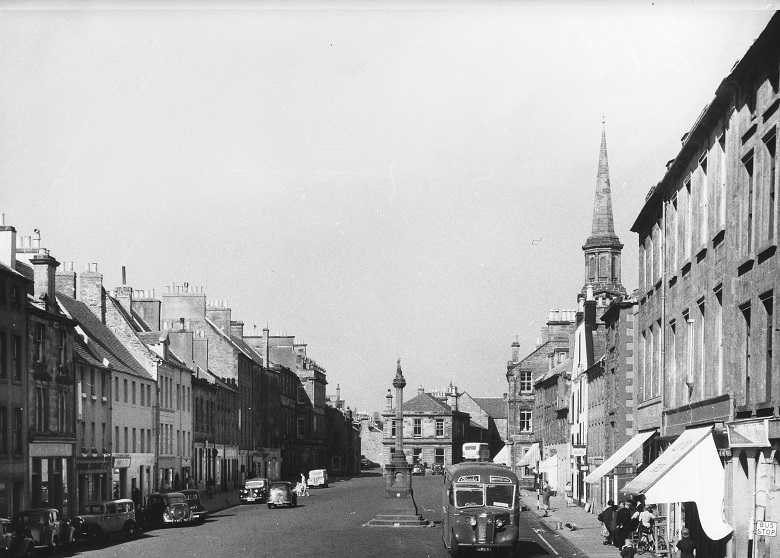
- so much space for car parking in the 1950s/60s High Street that one could move one’s car from shop to shop and park at each!
- cattle being herded down Pencaitland Road and across to the market behind Hope Park
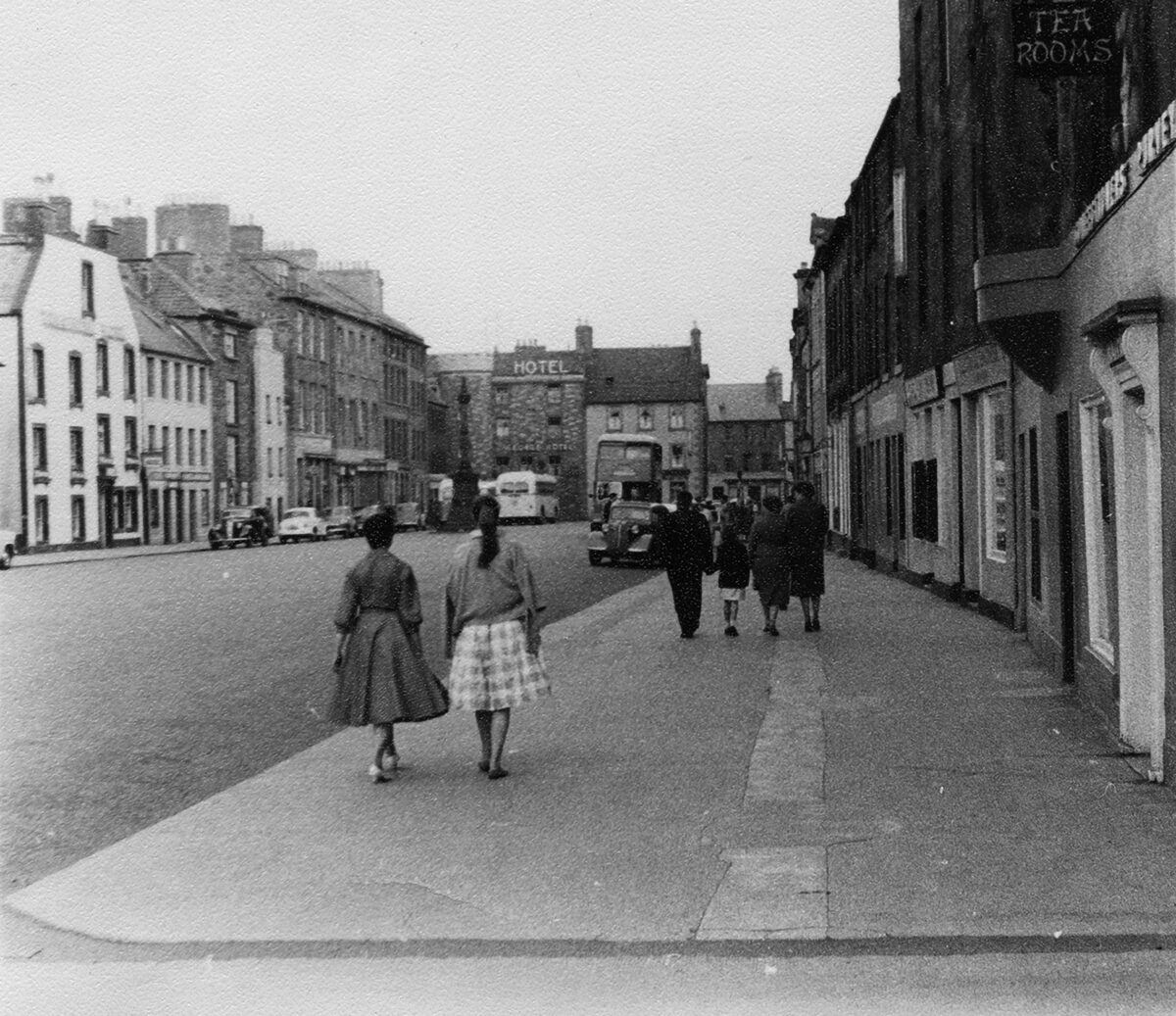
- pre-supermarkets, Haddington boasted around 5 butchers, a couple of grocers (Purvis towards the east end of the High Street and a more upmarket one opposite) large coop store with tea room in Lodge Street, a fishmongers, 2 or 3 newsagents, Mains the Saddler from early in 20th century until recent years, and so on
Nungate
- close-knit community separate from the main part of the town, seen as ‘different’ and was rather looked down upon
War
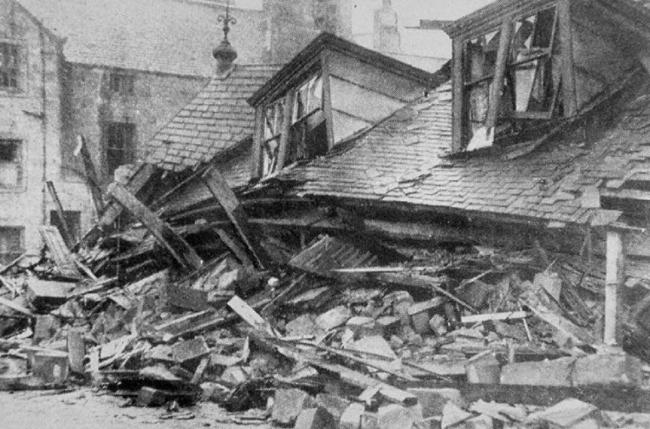
- sent out for fish and chips then the bombs fell!
Housing
- major council house building programme post war
- to accommodate locals and
- Glasgow overspill
- employment in local factories
- strangeness of space in houses and outside after crowded tenements and busy city streets
- different accents
Work
- agricultural
- domestic service
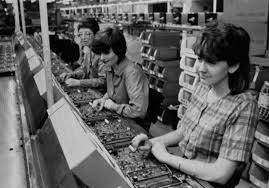
- RANCO motors (electrical)
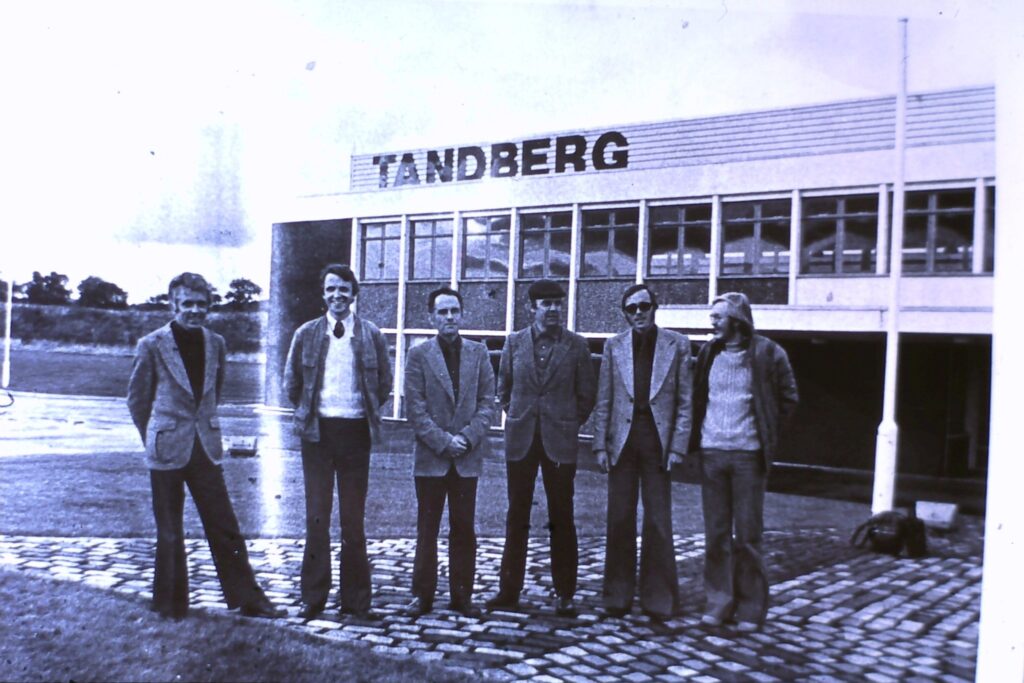
- Gateside developments: Hilger Electrics, Tandberg, Mitsubishi
School Experiences
- Technical education boys – woodwork, metalwork etc. prep for trades
girls – cooking and housework! (roundly hated)
Social Life for the young
- New County Cinema
- Haddington Festival
- Café culture – 2 cafes in High St: Central Café and Mochas Café
- Jukebox
- Central Café “a den of iniquity” (a Knox Academy rector from the 1950s/60s)
- Brownies and Guides and other youth organisations
- Admissions of unruliness
Epilogue
Provost John MacMillan
- Future
- Range of assets to encourage a more integrated community as population grows
- more visitors
- “not a bad wee place”
Peter R 23 Feb 2026
Details of publications
As well as the 13-volume compendium, the EERC has published a number of publications including the Flashbacks and Regional Flashback series, based on primary sources. Examples include:
Going to the Berries: Voices of Perthshire and Angus Seasonal Workers by Roger Leitch, NMS Publishing, 2020
Border Mills: Lives of Peebleshire Textile Workers by Ian MacDougall, NMS Publishing, 2023
From Land to Rail: Life and Times of Andrew Ramage 1854-1917, Ed. Caroline Milligan and Mark A Mulhern, NMS Publishing, 2014
Jock’s Jocks: Voices of Scottish Soldiers from the First World War, by Jock Duncan, NMS Publishing, 2019
The available titles can be purchased via the NMS website: https://shop.nms.ac.uk/collections/books
You must be logged in to post a comment.