Thursday 15th January, 7.30, Holy Trinity Church, Church St, Haddington – Elisabeth Rébeillé-Borgella, Historian.
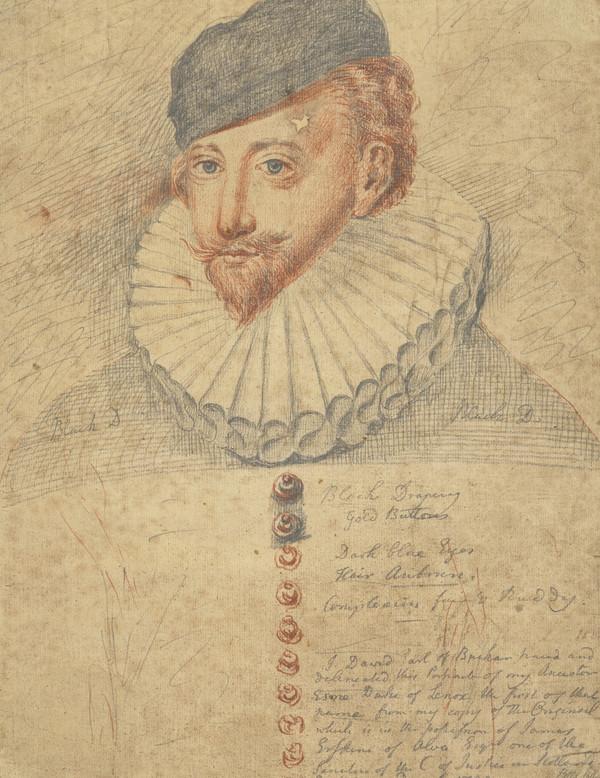
Esmé was a descendant of Sir John Stewart of Darnley who had served as constable of Scottish forces fighting for the French in the 100 Years War – as part of ‘The Auld Alliance’ against England. In1422 the French rewarded him for his services by granting, among other things, the honour of Seigneur (Lord of the Manor) of Aubigny. Later Stewarts of this family were given French citizenship and the surname changed to the French spelling. This established the French branch of the Stuart family of which Esmé Stuart was the 6th Seigneur d’Aubigny. The relationship of the French Stuarts to the Scottish royal line was indirect, although Esmé was rather more closely related as cousin of Henry Stewart, Lord Darnley, James VI father, and thus second cousin to the king himself.
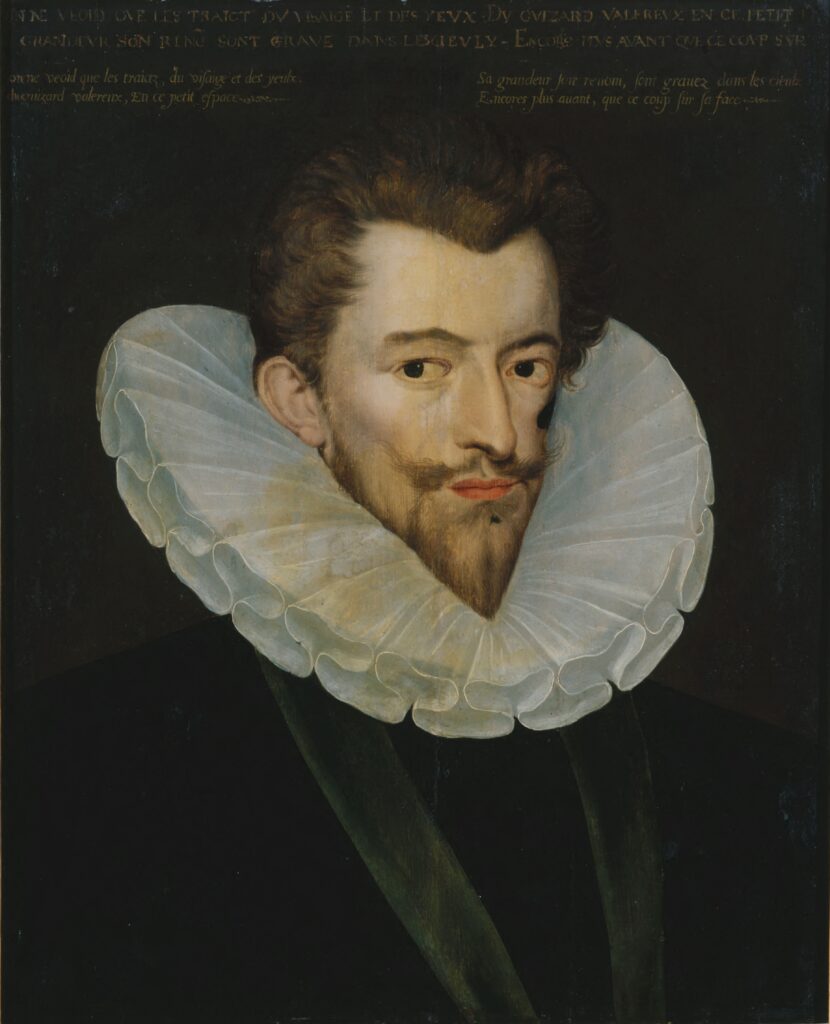
As a teenager Esmé fought with his father in the war against Italy, his early reputation as a soldier easing his way into the court of Charles IX. As part of the king’s circle he soon became a Gentleman of the King’s Household, and then Gentleman of the King’s Chamber in 1570. Esmé, immersed in the Valois court, developed the diplomatic skills needed to maintain his influence there. In addition, in 1572 he married Catherine de Balsac which helped him increase his political network through the Balsac family including their close ally, the powerful Duke of Guise. As a devout Catholic, he was associated with the Catholic League, an anti-Huguenot organisation, and may have played some part in the St Bartholomew’s Day Massacre in 1572 with which Guise was closely associated.
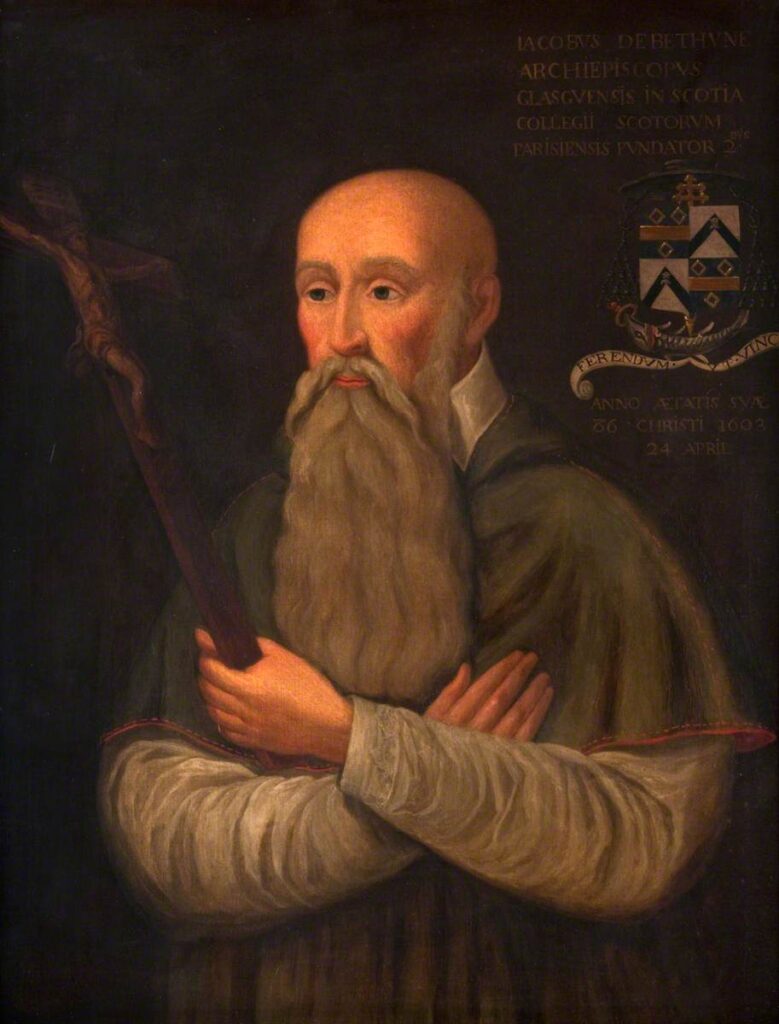
The Scottish ambassador to France around this time was James Beaton, Archbishop of Glasgow. He had served Mary Queen of Scots in the same role and was a determined opponent of the Scottish reformers. He belonged to a strong Catholic network supporting the imprisoned Mary and working towards both her reinstatement as Queen and the re-establishment of Catholicism as the official religion in Scotland.
Esmé met with him, and possibly there was some discussion on how Esmé might influence the Scottish court in leaning towards the return of the Queen and of her faith. Thus, in the spring of 1579 at the age of 37, Esmé was invited to Scotland.
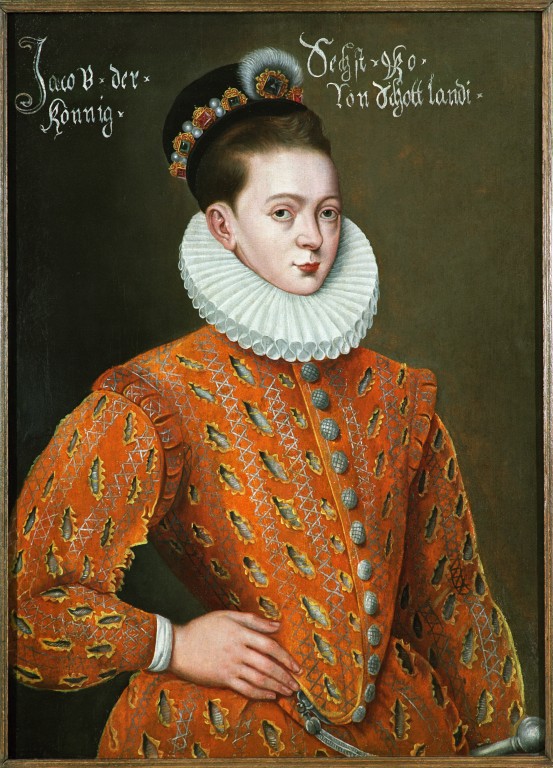
In September he was welcomed at Stirling by the 13-year-old King James. The delighted king took an immediate liking for this elegant French nobleman and their relationship quickly blossomed.
James had Esmé lodged next to him at Holyrood and their mutual regard soon led to Esmé becoming the king’s principal companion and confidant – the royal ‘favourite’. They shared a very close affection, familial or otherwise is not known. Certainly, it is likely that James had some sort of adolescent crush on his accomplished, urbane French relative. Esmé’s long service at a high level in the court of Henry III had equipped him well for his new role as mentor and friend to James. While it is possible that Esmé’s feelings for James were entirely familial – a fond uncle figure perhaps – there were accusations from some that Esmé had corrupted the king, abused him and subjected him to ‘foreign’ influence! Assuredly, the frequent and overt show of affection between them would have been proof of this to some. In 1580 Esmé became First Gentleman of the Chamber and, as such, was responsible for the selection of the 24 Gentlemen of the Chamber. He was appointed to the Privy Council in the same year. In 1581 James conferred on him the title of Duke of Lennox – at that time the only duke in Scotland and so the most powerful member of the Privy Council. While he had many supporters in the establishment, he also had many opponents. His elevation bred resentment and distrust within the Kirk, the Scottish nobility and England.
He had been, and remained, a devout Catholic despite his public conversion to Presbyterianism in 1580. The Kirk and many others were deeply suspicious, perhaps with good reason, and saw this move as a sham. Esmé was closely associated with a Catholic conspiracy the aims of which were to depose Elizabeth I and return England and Scotland to the Catholic faith under the joint rule of James and his mother, Mary. This involved landing a Spanish army at Dumbarton both to wage war and to stimulate insurrection by Catholics throughout the two kingdoms. This ‘Conspiracy of Sens’ involved Philip II of Spain who would provide finance and an army, Pope Gregory XIII, the Duke of Guise and Mary Queen of Scots. Esmé was in communication on this matter with Mary Queen of Scots and with the Duke. He seems to have been at the heart of the plot, his role being to promote Catholic interests in Scotland, to try to convert James and to perhaps be in charge of military operations after the Spanish landing.
In the event Philip provided neither money nor army and the plot failed. In the summer of 1582 James was kidnapped by a group of disaffected nobles – the Raid of Ruthven – and held for 10 months. The object was to remove him from the influence of French and pro-Catholic policy. A document signed by 40 nobles laid out a case against Esmé and ordered him to leave Scotland. Before he departed for England and France, he publicly refuted the charges against him. Through all of this James remained loyal to his cousin.
Esmé met briefly with Elizabeth of England as he passed through London and he arrived in Paris in February 1583. Here he met with Archbishop Beaton, the Duke of Guise and Henry III, presumably to debrief them on events in Scotland and the failure of the conspiracy. Taken ill, he died in May 1583. In his will he left all his art collection to James, revealing his abiding affection for the Scottish king who had shown him such favour and loyalty. Curiously he did not recant his Presbyterianism.
Thus, in a brief period of 3 years, Esmé the French nobleman had become the favourite of James VI, risen to head the Privy Council of Scotland and then lost it all and was expelled from the country of his ancestors. But later in his reign it was clear that James retained a great fondness for Esmé as expressed in his poem ‘Ane Tragedie of the Phoenix’, and continued to promote the house of Lennox throughout his reign.
Peter Ramage 20 Jan ‘26
You must be logged in to post a comment.